Magazine · Clubs
Behind the Floats: How Carnival Clubs Make It Happen
From Somerset to Malta and Brabant, the story of carnival begins months before the procession and continues in the photographs everyone takes.
By Christian KuckertUpdated November 11, 2026
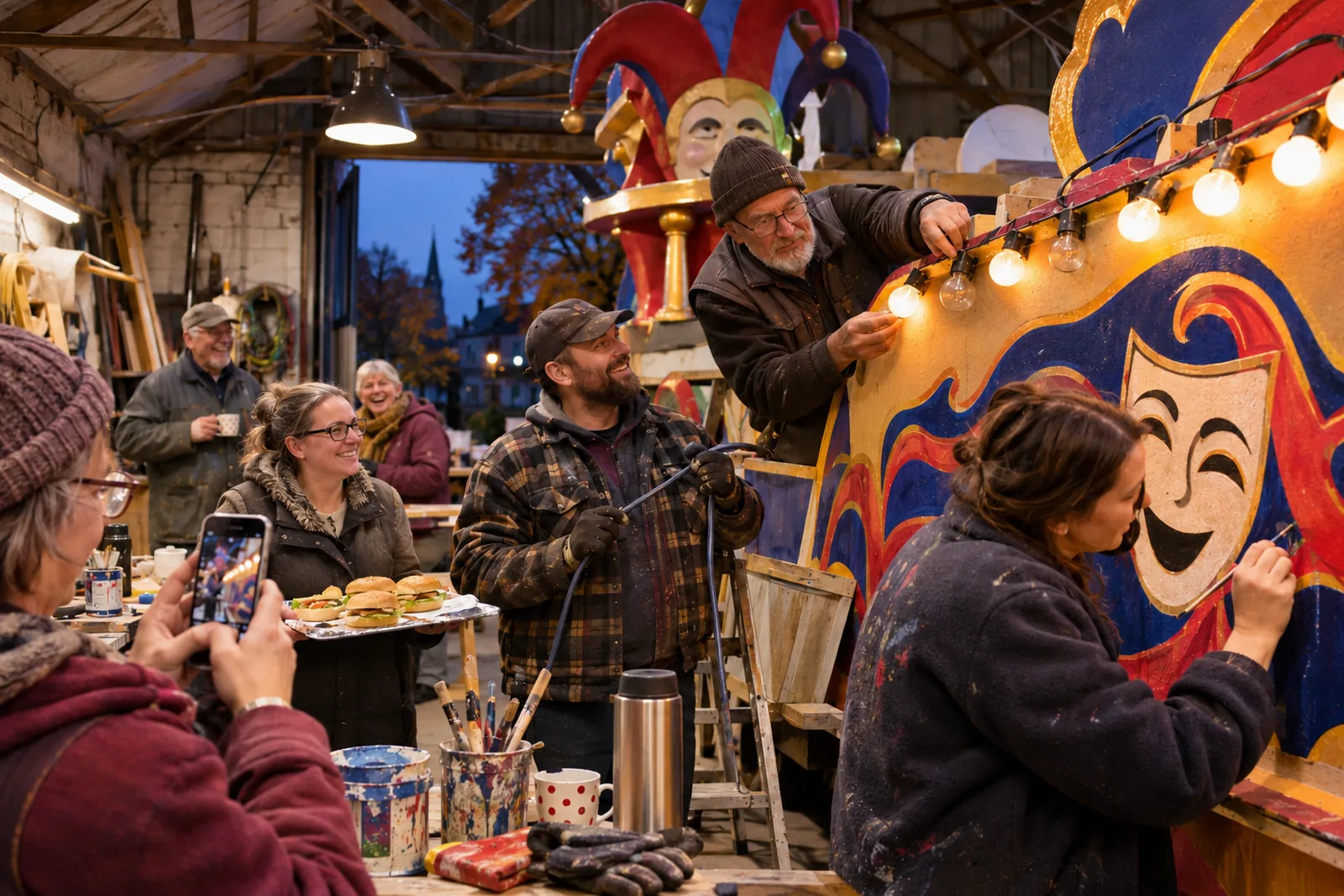
One autumn evening, a handful of volunteers stand around a half-built carnival float in a draughty club workshop. Someone tests a string of lights. All but one bulb glow. A friend holds the cable while another checks a painted panel. Someone has brought sandwiches. A phone comes out to photograph the moment before they try again.
Whether your group builds an illuminated cart for Bridgwater or helps organise a village procession with three floats, you will recognise that scene. Carnival is made on evenings like this, long before anyone gathers along the route.
The audience sees costumes and moving lights. The builders remember missed stitches, extra hands and the bulb that refused to work. Those are photographs worth keeping, too.
Somerset: the carnival begins in the workshop
In Somerset, carnival has its own autumn rhythm. Bridgwater Guy Fawkes Carnival takes place on the first Saturday in November, with roots linked to the Gunpowder Plot of 1605. Its illuminated procession includes elaborate carts as well as walking entries. For the clubs taking part, the public evening is only one part of a much longer story.
Months go into planning a theme, constructing a cart, sorting the lighting, making fancy dress and practising together. Bridgwater opens the Somerset County Guy Fawkes Carnivals circuit, which continues through other towns, including Wells and Glastonbury. The clubs take their entries from town to town, so the people who built them follow their work along the whole circuit.
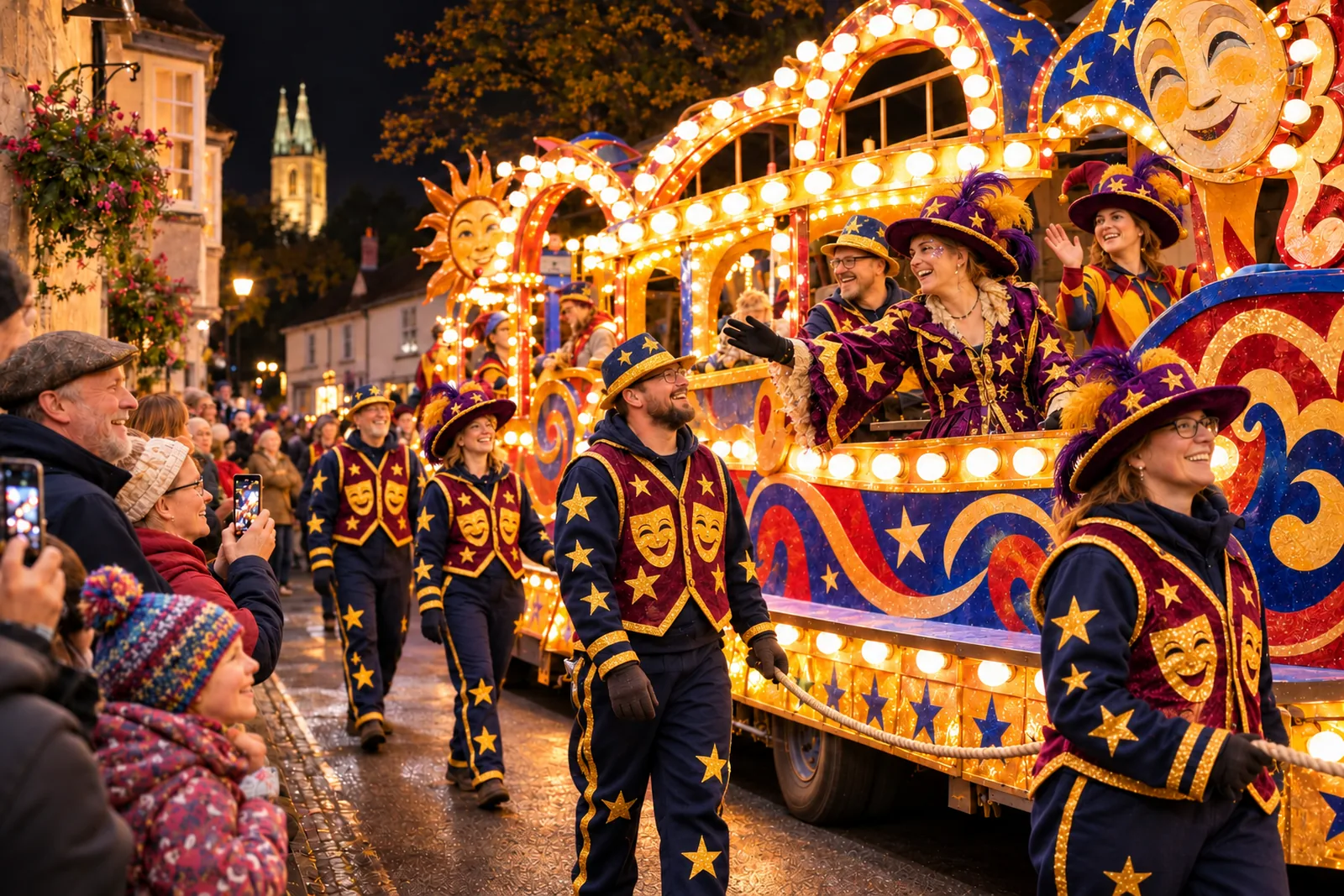
Your village carnival might have fewer floats and a shorter route. Yet the photographs of a late rehearsal, a last-minute repair or a shared meal can mean just as much to your club as the picture of the finished entry.
Notting Hill: making something together
Notting Hill Carnival has a different calendar and a different cultural story. Its street celebration began in 1966, building on Caribbean carnival events held indoors in London from 1959. Today it takes place over the August bank holiday weekend. Beyond the procession, its creative energy comes from groups preparing their own contribution.
Mas bands develop a theme and coordinate their costumes as a group. Drawing on masquerade traditions from Trinidad, many bands work in mas camps, places where people gather to make and prepare what they will wear. The finished designs matter, but so do the conversations and work behind them.
Your own committee may meet around a smaller table with fewer materials. The feeling is familiar: one person brings an idea, someone else makes it possible, and the whole group recognises itself in the result.
Malta: two ways to bring carnival into the streets
In Malta, carnival arrives before Lent. Valletta and Victoria on Gozo have organised processions with floats and dancing groups. Here, much of the excitement lies in preparing together and entering the street as one group.
Nadur on Gozo offers another expression. After dark, the village becomes a setting for a more spontaneous carnival with no fixed programme. People assemble inventive disguises from old clothes and household objects. Satire and silent masked figures are part of its distinctive atmosphere.
Not every community needs a large float or a formal parade. If your friends reinvent a small celebration each year, the photographs of how it came together can be as revealing as the photographs of the evening itself.
Brabant: a few friends can make a procession
In the Dutch province of North Brabant, local carnival can even give a town another name. During the celebrations, Best is known as Klompengat. Groups such as a carnavalsvereniging or a bouwgroep prepare floats for the optocht, often beginning the building work months beforehand.
A bouwgroep can start with a small circle of friends, a place to work and an idea that gradually becomes something the whole street can enjoy. Elsewhere in northern Europe, carnival takes place on different dates again, including Aalborg in May.
Your small club needs no famous procession to have a story worth recording. The people turning up to help are already part of it.
One procession, many different photographs
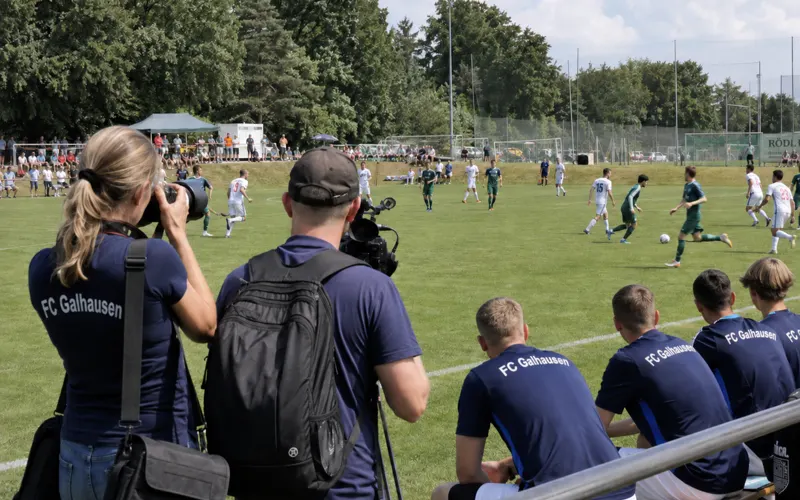
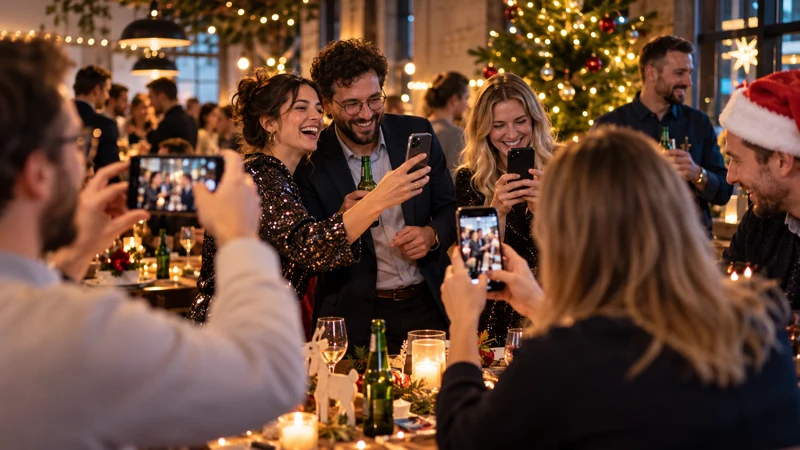
The person fixing a light remembers how often it failed during testing. The person walking beside the float sees the concentration on a friend’s face. Someone at the roadside catches a reaction that nobody on the cart could see. Each phone holds a different view of the same carnival.
Later, those pictures disappear into private messages and camera rolls. The most treasured image may not show the brightest lights or the tidiest fancy dress. It might show a tired volunteer laughing over a crooked decoration, or a neighbour who stepped in just when another pair of hands was needed.
When the pictures return to the room
Imagine a club social after the procession. A photograph appears on the screen: the workshop evening when one bulb refused to light. Someone explains what happened next. Across the room, another volunteer remembers the same evening differently, and the story grows.
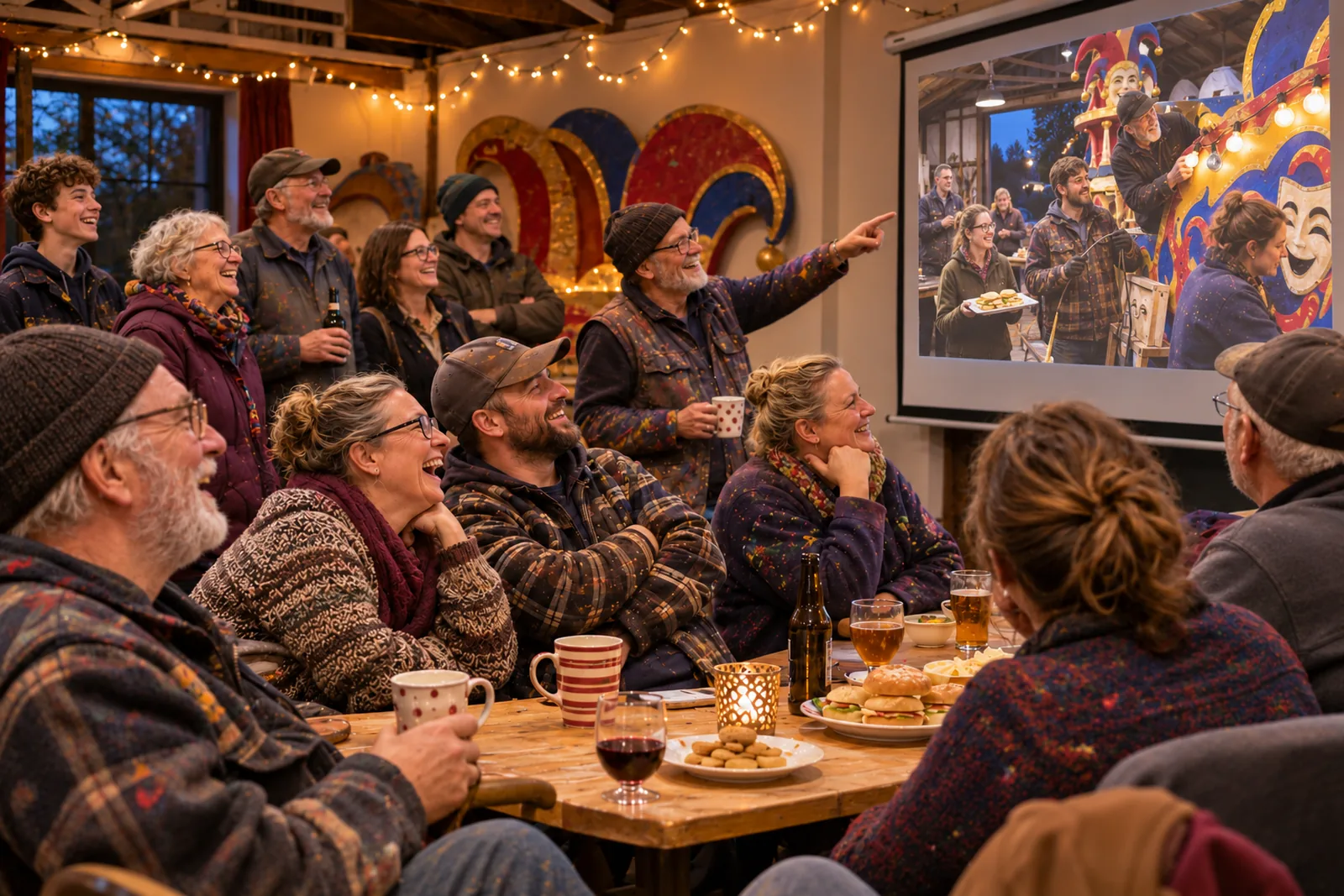
A shared photo display can give these small moments another audience at a club gathering or celebration. A live photo display with Live Sessions is one way of bringing different perspectives into the same room, rather than leaving them scattered across phones.
The work ends, but the conversations continue
Packing away the materials does not end the story. At the next meeting, someone asks for the picture taken on the first building night. Another wants to find the photograph of the group just before setting off. A caption restores a forgotten detail; a comment recalls who came up with an idea.
When the next carnival approaches, photographs help a group remember not just what it made, but how it worked together. For a newcomer, a picture of an ordinary workshop evening can be a welcome introduction to the people who make the celebration happen.
Keep your carnival photographs together with imiji
With imiji, your carnival club or committee can make separate albums for building nights, fancy dress preparations, the procession and the get-together afterwards. Members and invited guests who have joined an album can add their own photographs, bringing more than one point of view into the story.
- Workshop
- Fancy dress
- Procession
- Memories
Photo titles, comments and likes can help everyone recognise the moments that spark a conversation. You can also display selected pictures on a screen using Live Sessions, with moderation when needed.
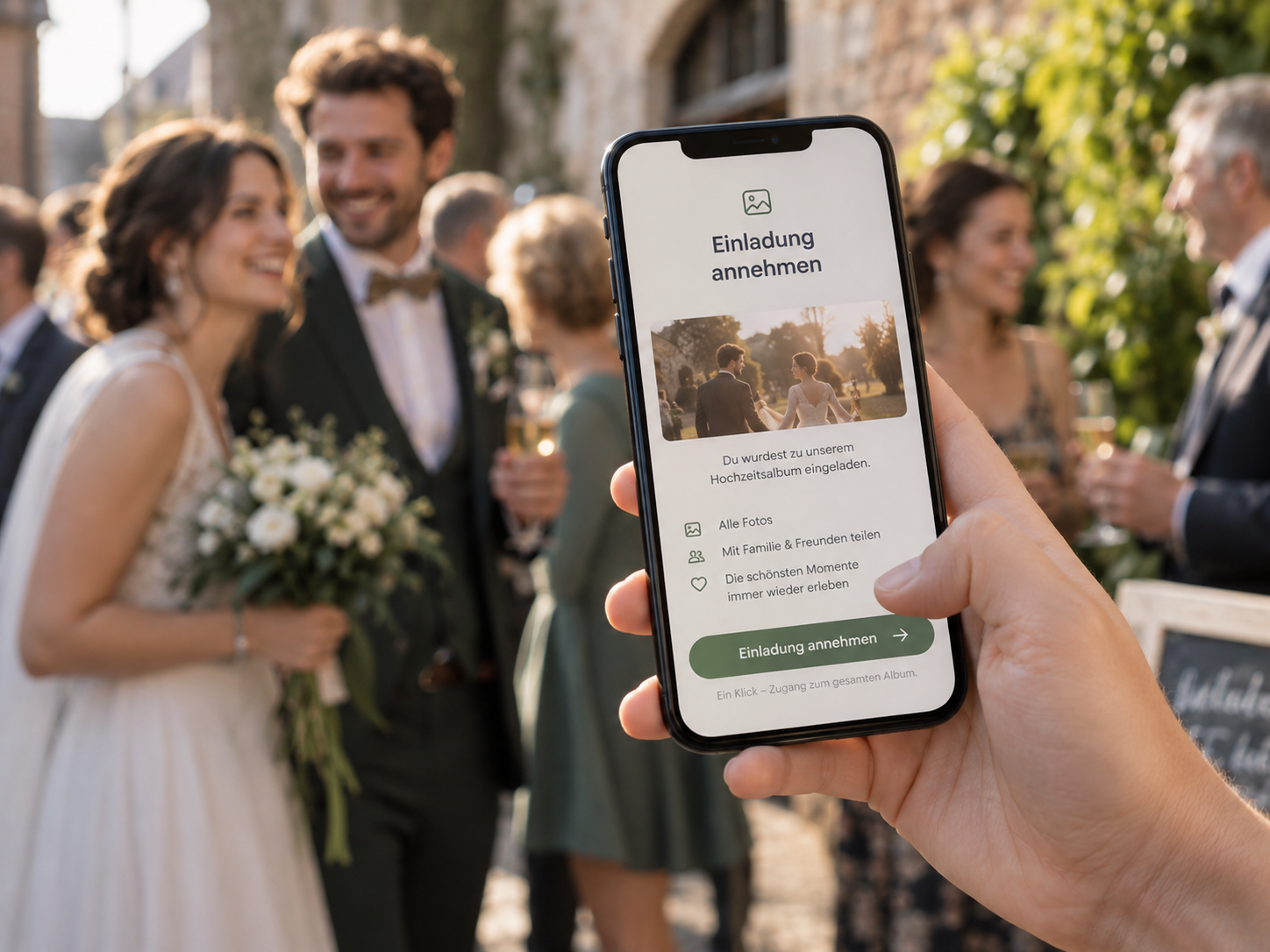
Anyone who joins an album registers. Invite people through a shared link or QR code, or send a personal invitation tied to an email address. An invitation list helps you manage who takes part.
A club album shared with a defined group is different from putting photographs on a public feed. Think carefully before sharing recognisable images, ask the people involved, and speak to parents before sharing pictures of children. A restricted audience does not remove the need for care.
To keep the albums from depending on one volunteer, you can use a club email address for the account and appoint additional administrators for different albums. You can read more on our page for clubs and associations.
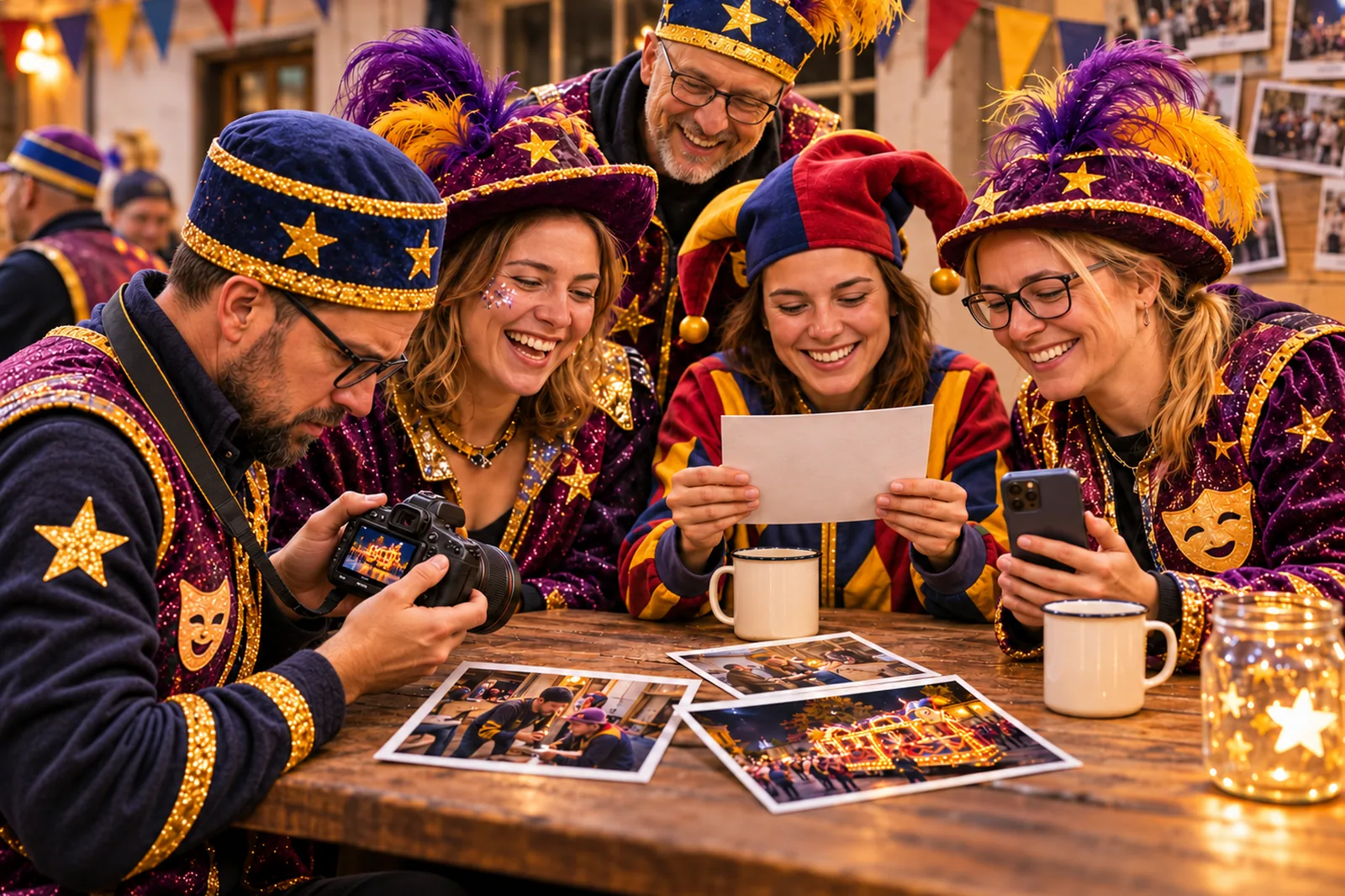
The bulb that finally came on
Back in the workshop, the one stubborn bulb eventually lights up. Nobody thinks to photograph it on its own. Instead, someone takes a picture of the volunteers standing together beside the cart, smiling at the small victory.
Months later, that photograph may bring back the whole evening: the cable, the jokes, the sandwiches, and the moment the group realised it could finish what it had started.
How does your group celebrate carnival, and which moments do you photograph? Tell us about your celebration. We would love to hear your story and see how we might support you.
Your club’s carnival story deserves an album
For the 2026 Club Campaign, imiji is offering 50 free Collection packages to clubs and associations. Apply by 31 December 2026 using your organisation’s official email address.
Share this article with the people preparing your next carnival.
Frequently asked questions
What is a carnival club?
A carnival club is a group of people who prepare an entry for a carnival procession, often over many months. In Somerset, clubs build illuminated carts or organise walking entries. Similar community groups in Brabant include a carnavalsvereniging and a bouwgroep.
Why are Somerset carnivals held in November?
The Somerset Guy Fawkes carnival tradition is connected with the Gunpowder Plot of 1605. Bridgwater Guy Fawkes Carnival takes place on the first Saturday in November and opens a circuit of processions through other Somerset towns.
Can you show photos live at a carnival event?
Yes. You can use Live Sessions to show photographs on a screen or projector during a club celebration, and moderate what appears. Make sure the people in the pictures are comfortable with how they are shared.